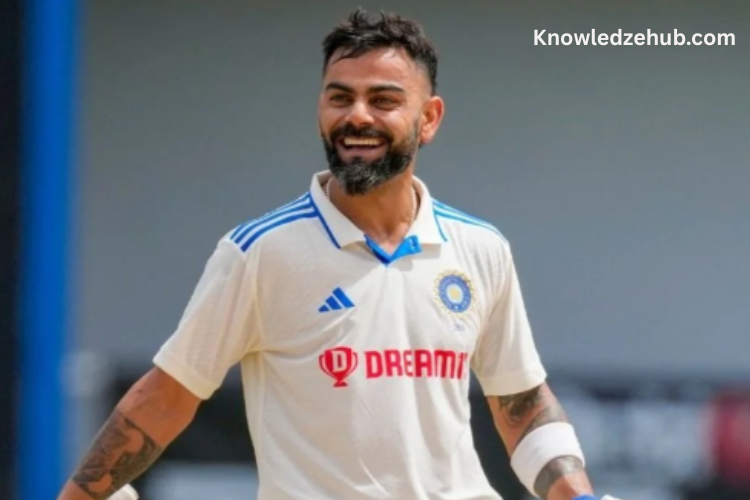

There is a cricket match that most people have forgotten. It happened in December 2006. Virat Kohli was 18 years old, playing for Delhi in the Ranji Trophy against Karnataka. It was his second first-class match, and Delhi were struggling badly — 130 for 5.
The night before the next day’s play, Virat received a phone call. His father, Prem Kohli — the man who had spent Delhi winters driving his son to 5 a.m. cricket practice, the man who had believed before anyone else believed — had suffered a brain stroke. He was gone.
Virat Kohli went back to the ground the next morning. He walked to the crease. He batted.
He scored 90 runs, helped Delhi save the match, and then — only then — left the ground to attend his father’s funeral.
In that single day, everything you need to know about Virat Kohli was already written. The fire. The will. The refusal to surrender. The love for the game that was so deep it had become inseparable from the love for the man who first placed a bat in his hands.
The world knows him as King Kohli. The record books know him as the cricketer with the most centuries in One Day International history — 54 hundreds and counting. The ICC knows him as the most decorated player in the organisation’s history, with ten ICC Awards to his name. But before all of that, there was a boy from Uttam Nagar in Delhi, and a father who believed.
Quick Facts About Virat Kohli
| Quick Facts | Details |
|---|---|
| Full Name | Virat Kohli |
| Date of Birth | 5 November 1988 |
| Age | 37 years (as of 2026) |
| Birthplace | Delhi, India |
| Raised In | Uttam Nagar, New Delhi |
| Nickname | King Kohli, The Chase Master, The Run Machine |
| Profession | Professional Cricketer |
| Known For | Most ODI centuries in history; ICC’s most awarded player |
| Wife | Anushka Sharma (married 11 December 2017) |
| Children | Vamika Kohli (daughter, born Jan 2021), Akaay Kohli (son, born Feb 2024) |
| Net Worth (2026) | Approx. Rs 1,050-1,100 crore ($125-130 million) |
| Nationality | Indian |
| Languages | Hindi, English |
| Residence | Mumbai, India |
| IPL Team | Royal Challengers Bengaluru (Rs 21 crore, IPL 2026) |
Early Life — Growing Up in Uttam Nagar, Delhi
Virat Kohli was born on 5 November 1988 in Delhi, into a Punjabi Hindu family. His father, Prem Nath Kohli, worked as a criminal lawyer. His mother, Saroj Kohli, was a homemaker. He has an elder brother, Vikas, and an elder sister, Bhawna. The family lived in Uttam Nagar — a busy, working-class neighbourhood in West Delhi, full of traffic, noise, and the kind of uncomplicated human warmth that big Indian cities generate in their older localities.
By every account, it was a loving household. Prem Kohli was strict in the way that fathers of that generation were strict — disciplined, principled, serious about education — but he was also the kind of father who would wake up before dawn and drive a small boy to a cricket ground in the middle of Delhi’s biting winters. Night after night. Match after match. Year after year.
Virat did not pick up cricket as a child. Cricket picked up Virat. He was three years old when he first held a bat and demanded that his father bowl to him. Most families would have laughed it off as a phase. Prem Kohli watched, saw something in the way his youngest child held that bat, and quietly filed it away.
By the time Virat was nine, the decision was made. In 1998, Prem Kohli enrolled his son at the West Delhi Cricket Academy — a newly established setup under coach Rajkumar Sharma. It was the best decision the family ever made.
Rajkumar Sharma knew within two weeks of coaching young Virat that he was looking at something out of the ordinary. The boy’s technique was clean. His concentration was unusual. His hunger to improve was unlike anything he had seen in a child that age. He told anyone who would listen — this one is different.
Education — School, Cricket, and an Early Choice
Virat Kohli did his early schooling at Vishal Bharti Public School in Delhi, and later transferred to Saviour Convent School in Paschim Vihar to better balance his cricket commitments with academics. His teachers remember him as someone who liked history — genuinely curious about the past — but who struggled with mathematics.
| Institution | Location | Achievement |
|---|---|---|
| Vishal Bharti Public School | Delhi | Early schooling |
| Saviour Convent School, Paschim Vihar | Delhi | Secondary schooling |
| West Delhi Cricket Academy | Delhi | Coached by Rajkumar Sharma from age 9 |
| Sumeet Dogra Academy | Delhi | Parallel match training |
He completed his studies up to Class 11. Then the call of cricket became impossible to ignore. By the time he was 16, he was playing for India’s Under-19 team. The choice between education and cricket made itself.
It is worth noting something here. Virat Kohli has spoken in interviews about discipline and preparation with the same seriousness that most people reserve for formal education. He may not have a degree, but he has applied an intensely academic approach to his craft — studying bowlers, reviewing footage, obsessing over technique, transforming his body into one of the fittest in international sport. Some education happens in classrooms. Some of it happens at the batting crease.
Career Journey — From Delhi Gully to Greatest of All Time
The Morning That Made Him (2006)
The story from that Ranji Trophy match in 2006 — the one where Virat scored 90 after learning of his father’s death — is not just a cricket story. It is the story of who Virat Kohli is at his core.
His coach Chetan Chauhan was shaken by what he saw. Here was a teenager, barely 18, who had just lost the most important person in his life, and he came back to the ground and played the innings of his young career. When asked about it later, Virat said simply that his father would have wanted him to continue — that he could not dishonour the sacrifice Prem Kohli had made by walking off the field.
After his dismissal, he left the ground quietly and attended the funeral.
His father never got to see what his son became. But in a very real sense, the entirety of what Virat Kohli became was built on the foundation Prem Kohli laid.
The U-19 World Cup — India’s Captain Announces Himself (2008)
In early 2008, Virat Kohli captained India’s Under-19 team at the ICC U-19 Cricket World Cup in Malaysia. India won the tournament. Kohli did not simply play in it — he led it, composed and aggressive in equal measure, exactly as he would lead India’s senior team a decade later.
That performance put him directly in the sights of IPL franchises. Royal Challengers Bangalore — then owned by Vijay Mallya — acquired him for $50,000 in the inaugural IPL auction later that year. A bargain for the ages.
International Debut — A Quiet Beginning (2008)
Virat Kohli made his ODI debut for India on 18 August 2008, against Sri Lanka in Dambulla. He scored 12 runs. Nothing in those 12 runs suggested the history that was coming. What they showed, though, was a composure that coaches and selectors noted quietly — no panic, no rushing, no attempt to prove himself on the first ball. Just a young man playing his game.
His Test debut came later — on 20 June 2011 against West Indies in Kingston. His early Test career was inconsistent. He struggled against quality fast bowling abroad. Critics were not kind. The word they used — the word that would follow Kohli into the darkest periods of his career — was technique. His technique against the short ball, they said, had a flaw. Virat heard them. And then he spent years proving them wrong.
The Rise — Finding His Place at Number Three (2012–2013)
Between 2012 and 2013, something clicked. Kohli’s ODI batting took on a dimension that Indian cricket had not seen since Sachin Tendulkar at his peak. He began chasing down targets that looked impossible with a calmness that bordered on contempt for the mathematics of the situation. 150 to win in 20 overs? Fine. 200 in 25? Watch me.
The nickname arrived organically — the Chase Master. Because no one in the world, in any era, has been as consistently brilliant at chasing down totals as Virat Kohli. His record while chasing in ODIs is the stuff of statistical fiction: 27 centuries while chasing, an average that climbs sharply when India needs runs most urgently.
In 2013, he reached the number one ranking in ODI cricket for the first time. He was 24 years old.
The Peak — A Four-Year Reign of Absolute Dominance (2014–2018)
From 2014 to 2018, Virat Kohli played cricket like a man who had decided records were simply furniture to be rearranged. He became the fastest player in history to 8,000, 9,000, 10,000, 11,000, 12,000, and 13,000 ODI runs. Each milestone broken not with a single big innings but with the grinding, relentless accumulation that marks the truly great.
In Test cricket, the transformation was even more dramatic. He scored four double centuries in Test cricket in four consecutive series — a feat no other Indian has achieved. In 2018, he was ranked number one in Tests, making him the only Indian cricketer ever to simultaneously hold the top ranking in all three formats.
He led India to their first-ever Test series win in Australia in 2018-19 — a result that earlier generations of Indian cricketers had tried and failed to achieve for decades. By the time he stepped down from Test captaincy in 2022, he had won 40 of 68 Tests — the most wins by any Indian captain in history by a considerable margin.
The 2016 IPL season stands as a monument to his individual brilliance. In 16 matches for Royal Challengers Bangalore, Kohli scored 973 runs — the highest tally ever recorded in a single IPL edition, including four centuries. No one has come close to matching that performance in any season since.
The Drought, The Dark Period, and The Comeback (2020–2022)
Then came the drought. Between March 2020 and September 2022, Virat Kohli did not score a single international century across any format. For a man who had been scoring them at a rate that seemed physically impossible, this was extraordinary. For 1,020 days, the centuries stopped.
The criticism was savage. Some called it the end. Others said age had caught up, that the hunger had gone, that fatherhood had softened him. He heard all of it.
In September 2022, at the Asia Cup against Afghanistan, Kohli walked to the crease with the weight of a thousand opinions on his back. He scored a T20I century — his first in any format in over 1,000 days. He celebrated with a rawness that said more than any interview could. Relief, defiance, joy, and something that looked like vindication all at once. He had not gone anywhere. He had been waiting.
The 2023 World Cup — The Greatest Individual World Cup Performance in History
At the 2023 ODI World Cup on home soil, Virat Kohli produced a performance that no adjective can adequately describe. He scored 765 runs in the tournament — the highest tally by any batter in a single edition of an ODI World Cup in history. He was named Player of the Tournament.
Along the way, in the semi-final against New Zealand at Wankhede Stadium, he scored his 50th ODI century — overtaking Sachin Tendulkar’s long-standing record of 49. He had done what many believed was genuinely impossible: he had broken Tendulkar’s record. A stadium full of Indian fans fell silent for a moment, and then erupted. Tendulkar himself was in the crowd. He stood and applauded.
Two Retirements, One Legacy (2024–2025)
After winning the 2024 T20 World Cup — scoring a crucial 76 in the final against South Africa — Kohli announced his retirement from T20 International cricket. He was Player of the Match in the final. He was going out at the top.
In the 2025 ICC Champions Trophy, he was instrumental once again as India won the title, scoring a century in the process. Then, on 12 May 2025, he announced his retirement from Test cricket — having played 123 Tests, scored 9,230 runs, and won 40 matches as captain.
As of 2026, Virat Kohli plays only ODI cricket for India. He continues to score centuries. He scored 124 against New Zealand in Indore in January 2026, his 54th ODI hundred. The 2027 Cricket World Cup is on the horizon. The story is not over yet.
Career Timeline
| Year | Milestone |
|---|---|
| 1998 | Enrolled at West Delhi Cricket Academy under Rajkumar Sharma |
| 2002 | Made Delhi Under-15 team; highest run-scorer in Polly Umrigar Trophy |
| 2006 | First-class debut for Delhi; father Prem Kohli passes away |
| 2008 | Captained India to U-19 World Cup victory in Malaysia |
| August 2008 | ODI debut vs Sri Lanka in Dambulla |
| 2008 | Acquired by Royal Challengers Bangalore in inaugural IPL |
| June 2011 | Test debut vs West Indies in Kingston |
| 2013 | Reached No. 1 ODI ranking; Chase Master era begins |
| 2014 | ICC ODI Player of the Year; T20 World Cup Player of Tournament |
| 2015 | Fastest to 10,000 ODI runs |
| 2016 | Scored 973 IPL runs in a single season — all-time record |
| 2017 | Married Anushka Sharma in Florence, Italy |
| 2018 | Ranked No. 1 in all three formats simultaneously; first Test series win in Australia |
| 2019 | ICC Spirit of Cricket Award; ICC Cricketer of the Decade (2011-2020) |
| January 2021 | Daughter Vamika born |
| 2022 | Ended century drought; stepped down from all captaincy roles |
| November 2023 | Scored 50th ODI century at 2023 World Cup, breaking Tendulkar’s record |
| February 2024 | Son Akaay born |
| June 2024 | Won T20 World Cup; retired from T20 Internationals |
| February 2025 | Won ICC Champions Trophy |
| May 2025 | Retired from Test cricket after 123 Tests |
| January 2026 | Scored 54th ODI century vs New Zealand in Indore |
Major Achievements & Awards
- Most ODI centuries in history — 54 hundreds (surpassed Sachin Tendulkar’s record of 49 in 2023)
- Most ICC Awards in history — 10 ICC Awards, the most by any player ever
- ICC Cricketer of the Decade (2011-2020)
- ICC ODI Cricketer of the Year — 2012, 2017, 2018, 2023 (four times)
- ICC Cricketer of the Year — 2017, 2018
- First Indian to hold No. 1 ranking simultaneously in all three formats
- Most successful Indian Test captain — 40 wins in 68 Tests
- Highest score in a single ODI World Cup edition — 765 runs (2023)
- Highest runs in a single IPL season — 973 runs (2016)
- First player to score 20,000 international runs in a single decade (2019)
- Most runs while chasing in ODIs — 27 centuries while chasing
- 2024 T20 World Cup winner — Player of Match in final
- 2025 ICC Champions Trophy winner
- 2011 ODI World Cup winner
- 2013 ICC Champions Trophy winner
- Khel Ratna Award — 2018 (India’s highest sporting honour)
- Padma Shri — 2017
- Arjuna Award — 2013
- Time Magazine 100 Most Influential People — 2018
- Wisden Leading Cricketer in the World — three consecutive years
Virat Kohli Net Worth 2026
Virat Kohli’s net worth in 2026 is estimated at approximately Rs 1,050-1,100 crore — roughly $125-130 million USD. He is not just the wealthiest cricketer currently playing the game; he is, by a significant distance, the most commercially valuable athlete Indian sport has ever produced.
| Source / Asset | Value | Details |
|---|---|---|
| BCCI Central Contract (Grade B) | Rs 5 crore/year | Downgraded from A+ after Test & T20I retirements |
| IPL Salary (RCB 2026) | Rs 21 crore/season | Acquired by RCB at IPL 2026 auction |
| Brand Endorsements | Rs 80-100 crore/year | Puma, MRF, Audi, Tissot, Manyavar, PepsiCo |
| One8 Brand | Significant equity | Kohli-owned sportswear & lifestyle brand |
| WROGN (Menswear) | Co-founder equity | Youth fashion label co-founded 2014 |
| Go Digit Insurance investment | 3.6x return (2024 IPO) | Joint investment with Anushka Sharma |
| Mumbai Apartment (Worli) | Rs 34 crore | Luxury sea-facing, Omkar 1973 |
| Car Collection | Rs 20+ crore | Bentley, Audi R8, Lamborghini, Range Rover, Porsche |
| Total Net Worth (2026) | Rs 1,050-1,100 crore | Approx. $125-130 million USD |
His endorsement deal with Puma — a multi-year contract reportedly worth Rs 110 crore — is among the most lucrative athlete-brand partnerships in Indian sports history. His deal with MRF for bat stickers, reportedly worth Rs 12.5 crore annually, makes him one of the highest-paid bat endorsers in the world.
His business philosophy has evolved from endorsing brands to owning them. WROGN, the menswear brand he co-founded in 2014, has grown into a significant retail presence. One8, his sportswear and lifestyle brand, has expanded to include One8 Commune restaurants across multiple Indian cities.
Family & Personal Life
Wife — Anushka Sharma
Virat Kohli met Anushka Sharma in 2013 during the shoot of a television commercial for Clear shampoo. He has been open about how that meeting felt — immediate, easy, like talking to someone he had known before. What began as a professional introduction became one of the most talked-about love stories in Indian popular culture.
They kept the relationship largely private for years. Both faced an extraordinary amount of public pressure and media speculation. When India lost matches, some commentators — embarrassingly — pointed to Anushka’s presence in the stands as a distraction. Virat responded with a clarity that was admirable: he defended his partner publicly and firmly, repeatedly, without hesitation.
On 11 December 2017, they married in an intimate ceremony in Florence, Italy — a city chosen deliberately for its beauty and the privacy it offered. The ceremony was attended only by close family and friends. Those who know the couple describe a genuine partnership — Anushka is deeply involved in his business ventures, their joint investment in Go Digit Insurance, and their shared advocacy for plant-based food through Blue Tribe.
Children
Virat and Anushka have two children. Their daughter, Vamika Kohli, was born on 11 January 2021. Their son, Akaay Kohli, was born on 15 February 2024. The name Akaay — meaning ‘immortal’ or ‘bodyless’ in Sanskrit — was chosen with the same kind of thoughtfulness that characterises most of Virat’s decisions.
Kohli is intensely private about his children. Despite 265 million Instagram followers, he has shared almost nothing of Vamika’s face publicly. He has spoken about this consciously: the children did not choose their father’s fame, and they should be allowed to grow up without it shaping them before they can understand it.
His Father’s Memory
Virat Kohli has spoken about Prem Kohli in every important interview he has given. The man who died when Virat was 18, who never saw the records, who never saw the World Cup medals or the centuries or the financial empire — he is present in everything Virat does.
In a 2014 interview, Virat said the hardest thing about success is knowing his father is not here to see it. For a man who had spoken publicly about everything from fitness to diet to spirituality, it was one of the few times he looked genuinely small — not as a cricketer, but as a son.
Virat Kohli & Life Beyond Cricket
The Fitness Revolution
Virat Kohli changed the physical culture of Indian cricket. When he emerged, the stereotype of the Indian cricketer included a certain casualness about fitness. He dismantled it personally and then, through the force of example and expectation, changed it for an entire generation.
He follows a plant-based diet, meditates daily, and trains with an intensity that younger Indian cricketers have acknowledged as the new standard. His transformation — from a slightly chubby 19-year-old in early IPL footage to one of the most athletic fielders in the world by his mid-20s — is documented and widely discussed. He did it through discipline, not genetics.
Social Media — The Most Followed Asian on Instagram
As of March 2026, Virat Kohli has approximately 265 million Instagram followers — the highest for any Asian account on the platform, and one of the highest in the world. Each Instagram post is estimated to be worth approximately Rs 11.5 crore in commercial value. His Twitter following exceeds 60 million.
He has been consistently strategic about what he shares and what he protects. His social media is curated — not artificially, but thoughtfully. You see his training. You see his family, in carefully chosen moments. You see his opinions on causes he cares about. You do not see everything. That discretion, in the age of oversharing, is itself a form of personal branding.
Frequently Asked Questions About Virat Kohli
1. What is Virat Kohli’s full name?
Virat Kohli’s full name is Virat Kohli. He was born on 5 November 1988 in New Delhi, India, into a Punjabi Hindu family. His father was Prem Nath Kohli, a criminal lawyer, and his mother is Saroj Kohli.
2. How many ODI centuries does Virat Kohli have?
As of 2026, Virat Kohli has scored 54 ODI centuries — the most by any batter in the history of One Day International cricket. He surpassed Sachin Tendulkar’s record of 49 centuries during the 2023 ODI World Cup semi-final against New Zealand at Wankhede Stadium, Mumbai, on 15 November 2023.
3. What is Virat Kohli’s net worth in 2026?
Virat Kohli’s net worth in 2026 is estimated at approximately Rs 1,050-1,100 crore (around $125-130 million USD). His income comes from his BCCI Grade B contract, IPL salary with Royal Challengers Bengaluru (Rs 21 crore), brand endorsements worth Rs 80-100 crore per year, business ventures including One8 and WROGN, and extensive real estate holdings.
4. Who is Virat Kohli’s wife?
Virat Kohli is married to Bollywood actress and producer Anushka Sharma. They met in 2013 during a television commercial shoot, dated for four years, and married in an intimate ceremony in Florence, Italy, on 11 December 2017. They have two children — daughter Vamika (born January 2021) and son Akaay (born February 2024).
5. Has Virat Kohli retired from cricket?
Virat Kohli retired from T20 International cricket in June 2024 after India won the T20 World Cup, in which he was named Player of the Match in the final. He retired from Test cricket on 12 May 2025, after 123 Tests and 9,230 runs. As of 2026, he continues to play ODI cricket for India and is widely expected to feature in the 2027 Cricket World Cup.
6. What is Virat Kohli’s highest score?
Virat Kohli’s highest score in Test cricket is 254 not out, made against South Africa in Pune in October 2019. His highest score in ODIs is 183, made against Pakistan in Dhaka in March 2012 — one of the greatest chasing innings in the history of the format.
7. What awards has Virat Kohli won?
Virat Kohli has won ten ICC Awards — the most by any player in ICC history. He has received the Khel Ratna (2018), Padma Shri (2017), Arjuna Award (2013), ICC ODI Cricketer of the Year four times, ICC Cricketer of the Year twice, and the ICC Cricketer of the Decade award (2011-2020).
8. What is Virat Kohli’s record as India’s Test captain?
Virat Kohli captained India in 68 Tests and won 40 of them — the most wins by any Indian Test captain in history. Under his leadership, India won their first-ever Test series in Australia (2018-19), retained the No. 1 ICC Test ranking for a record period, and became one of the most dominant Test sides in the world.
Also See on KnowledgeHub
- Rohit Sharma — The Hitman from Nagpur who became India’s most successful captain
- MS Dhoni — Captain Cool and the architect of modern Indian cricket
- Sundar Pichai — The Chennai boy who became CEO of Google and Alphabet Inc.