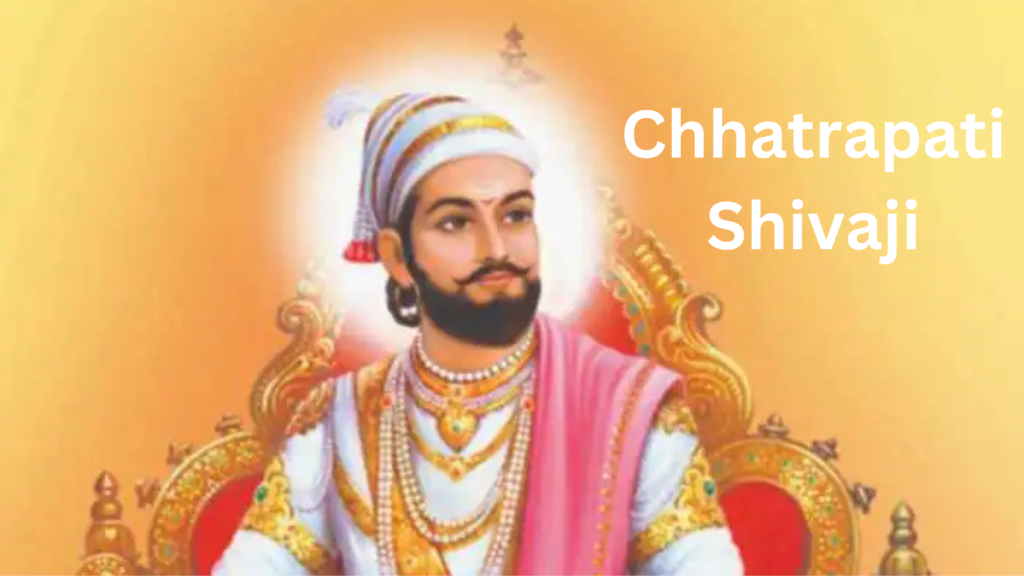

In 1630, in a hill fort in the Sahyadri mountains, a boy was born to a family that served the Deccan sultanates. The land around him was ruled from distant capitals by sultans and emperors. Ordinary people paid taxes to rulers who rarely asked what they wanted.
That boy was Shivaji Bhosale. He grew up to challenge the Adilshahi, the Nizamshahi and the mighty Mughal Empire. With small armies, hill forts and fast-moving cavalry, he carved out an independent kingdom. On 6 June 1674 he was crowned Chhatrapati, sovereign of the Maratha state.
Nearly four centuries later, he remains one of the most revered figures in Indian history, especially in Maharashtra.
Quick Facts About Shivaji Maharaj
| Full Name | Shivaji Shahaji Bhosale |
| Date of Birth | 19 February 1630 (the date accepted by the Maharashtra government) |
| Birthplace | Shivneri Fort, near Junnar, Maharashtra |
| Father | Shahaji Bhosale |
| Mother | Jijabai (Jijau) |
| Spouses | Saibai, Soyarabai, Putalabai, Sakvarbai and others |
| Children | Sambhaji, Rajaram and daughters |
| Title | Chhatrapati (crowned 1674) |
| Capital | Raigad Fort |
| Dynasty | Bhosale of the Maratha Empire |
| Died | 3 April 1680, Raigad Fort (aged about 50) |
| Successor | Sambhaji Maharaj |
Early Life: Shivneri to Pune
Shivaji was born at Shivneri Fort. His father Shahaji Bhosale was a military commander serving the Deccan sultanates. His mother Jijabai was a woman of exceptional character and political awareness.
Shahaji spent much of his career in service far from Pune, so Jijabai raised Shivaji with the help of trusted officials. She told him stories from the Ramayana and the Mahabharata and instilled a strong sense of justice and self-respect. Dadoji Konddev, the administrator of the Pune jagir, trained him in administration, revenue and warfare.
Shivaji grew up among the Maval valleys, riding through forest and hill country. He befriended young Mavala farmers and fighters such as Tanaji Malusare and Baji Prabhu Deshpande, who later became legendary commanders.
The Rise: Capturing the First Forts
Around 1645, when he was still in his teens, Shivaji took the Torna fort and then built Rajgad. These were the first steps of a long campaign. Control of forts meant control of trade routes, villages and revenue.
He gradually brought many hill forts under his control, including Kondhana, later renamed Sinhagad. By the end of his reign, hundreds of forts formed the backbone of his kingdom’s defence.
Key Battles and Events
Afzal Khan at Pratapgad (1659). The Adilshahi general Afzal Khan marched to crush Shivaji. A meeting was arranged at the foot of Pratapgad Fort. Accounts differ on details, but Shivaji killed Afzal Khan, and his forces then routed the leaderless Adilshahi army.
Pavan Khind (1660). Besieged at Panhala Fort by Siddi Johar, Shivaji escaped by night toward Vishalgad. Baji Prabhu Deshpande held the narrow pass of Pavan Khind with a small force to buy time and died there. Shivaji reached safety, and the stand is remembered as one of the great acts of Maratha sacrifice.
Shaista Khan in Pune (1663). The Mughal governor Shaista Khan occupied Pune. Shivaji launched a night raid on his quarters. Shaista Khan escaped but lost fingers, and the humiliation shook Mughal prestige in the Deccan.
Sack of Surat (1664). Shivaji raided the wealthy Mughal port of Surat. The raid damaged Mughal finances and showed how vulnerable their trade centres were.
Treaty of Purandar (1665). Mirza Raje Jai Singh, the Mughal commander, besieged Purandar. Shivaji signed a treaty giving up many forts to the Mughals.
Agra and the Great Escape (1666). Shivaji visited Aurangzeb’s court at Agra but was treated with disrespect and placed under house arrest. He escaped, according to tradition by hiding in large baskets, and returned to Maharashtra.
Sinhagad (1670). Tanaji Malusare died while recapturing Sinhagad. Shivaji is said to have mourned that the fort was won but the lion was lost.
Coronation as Chhatrapati (1674)
On 6 June 1674, Shivaji was crowned at Raigad in a grand ceremony led by the scholar Gaga Bhatt. The coronation formally declared an independent Hindu sovereign kingdom in a region long ruled by sultans and the Mughals. He took the title Chhatrapati, and Raigad became his capital.
Administration and Governance
Shivaji was not only a military leader. He built a structured state.
- Ashtapradhan Mandal: a council of eight ministers handling finance, defence, foreign affairs, justice and other portfolios.
- Revenue system: he reduced the power of intermediary landlords and tried to deal directly with cultivators.
- Discipline in war: commanders were expected to protect women, farmers and religious places, even in enemy territory.
- Religious tolerance: Muslims served in his army and administration, and mosques and shrines were respected.
- Language: he promoted Marathi and Sanskrit in administration and issued a Sanskrit royal seal.
The Maratha Navy
Shivaji understood the importance of sea power along the Konkan coast. He built a navy and constructed or strengthened sea forts such as Sindhudurg, Suvarnadurg and Vijaydurg. The fleet challenged the Siddis of Janjira and European naval powers, and it protected Maratha trade and coastal territory. He is often called the father of the Indian Navy for this vision.
Military Strategy: Ganimi Kava
Shivaji’s armies were far smaller than those of the Mughals, so he relied on speed, surprise and terrain. His guerrilla methods, known as Ganimi Kava, included:
- Lightning raids followed by quick withdrawal
- Use of forts and mountain passes as defensive anchors
- Strong intelligence networks and spies
- Avoiding open battle against stronger forces unless the advantage was clear
Family and Personal Life
Mother Jijabai. She remained his guide and closest influence. Her death in 1674, soon after the coronation, was a heavy personal loss.
Wives and children. Shivaji had several wives, including Saibai, Soyarabai, Putalabai and Sakvarbai. His eldest son Sambhaji and younger son Rajaram both later led the Marathas against the Mughals.
Death and Succession
Shivaji died on 3 April 1680 at Raigad, at about 50 years of age. The causes are debated by historians. A succession dispute followed, and Sambhaji eventually took the throne. The Maratha state survived Aurangzeb’s long campaigns and later grew into a major power across India under the Peshwas.
Legacy
Shivaji’s legacy is felt in many ways.
- Swarajya: his idea of self-rule inspired generations, including leaders of the Indian freedom movement.
- Forts: Raigad, Sinhagad, Pratapgad and Sindhudurg are major heritage and tourist sites.
- Public memory: statues, festivals, films, books and songs celebrate him across Maharashtra and beyond. Shiv Jayanti is observed every year on 19 February.
- Institutions: airports, stations, universities and memorials carry his name, including Chhatrapati Shivaji Maharaj Terminus and Chhatrapati Shivaji Maharaj International Airport in Mumbai.
Historians also note that Shivaji’s image has been interpreted in different ways over the years, and separating documented history from popular tradition remains an ongoing scholarly task.
Frequently Asked Questions About Chhatrapati Shivaji Maharaj
1. When was Shivaji Maharaj born?
He was born on 19 February 1630 at Shivneri Fort near Junnar. Some historians give other dates, but this is the one officially observed in Maharashtra.
2. Who were Shivaji Maharaj’s parents?
His father was Shahaji Bhosale, a military commander under the Deccan sultanates. His mother was Jijabai, who strongly shaped his values.
3. When was Shivaji crowned Chhatrapati?
He was crowned on 6 June 1674 at Raigad Fort.
4. How did Shivaji Maharaj die?
He died on 3 April 1680 at Raigad. The exact cause is uncertain, with illness being the most commonly cited explanation.
5. Why is Shivaji Maharaj famous?
He founded the Maratha Empire, built a strong administration and navy, used innovative guerrilla warfare, and stood up to far larger powers.
6. Who succeeded Shivaji Maharaj?
His elder son Sambhaji Maharaj succeeded him, followed later by Rajaram.