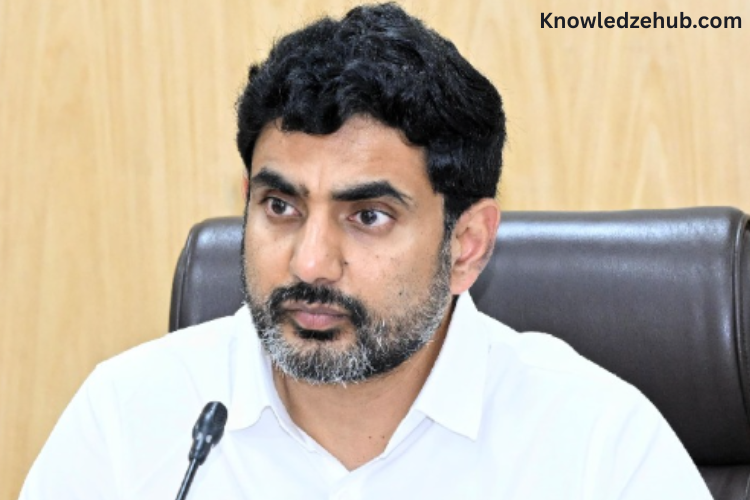

In a family where greatness is not inherited — it is expected — growing up was never simple. His grandfather, Nandamuri Taraka Rama Rao, was an icon who turned acting fame into political revolution and built one of Andhra Pradesh’s most powerful parties from scratch. His father, N. Chandrababu Naidu, served as Chief Minister four times and became synonymous with technology-led governance. The weight of that legacy pressed down from every direction.
For Nara Lokesh, that weight could have become a shortcut. It didn’t. When he lost his first Assembly election in 2019 — in a constituency chosen precisely because it mattered — he could have retreated. He walked instead.
Over nearly a year, he walked more than 4,000 kilometres across Andhra Pradesh. Village by village. Field by field. In heat that would stop most people. He listened to farmers, youth, workers, and the unemployed. He did not talk much. He listened. And Andhra Pradesh, slowly, started to look at him differently.
That walk — the Yuva Galam Padayatra — became the defining act of his political life. And when he returned to Mangalagiri in the 2024 elections, he won by a massive margin. The heir had become a leader in his own right.
Quick Facts About Nara Lokesh
| Detail | Information |
| Full Name | Nara Lokesh |
| Date of Birth | 23 January 1983 |
| Age | 42 years (as of 2026) |
| Birthplace | Hyderabad, Telangana, India |
| Nationality | Indian |
| Profession | Politician, Cabinet Minister |
| Political Party | Telugu Desam Party (TDP) |
| Current Position | Cabinet Minister, Government of Andhra Pradesh |
| Constituency | Mangalagiri, Andhra Pradesh |
| Father | N. Chandrababu Naidu (Chief Minister, Andhra Pradesh) |
| Mother | Nara Bhuvaneswari |
| Grandfather | N. T. Rama Rao (Founder, TDP; Former Chief Minister) |
| Wife | Nara Brahmani (née Nandamuri) |
| Son | Nara Devaansh |
| Education | B.S., Carnegie Mellon University; MBA, Stanford GSB |
| Known For | Yuva Galam Padayatra, tech-driven governance, 2024 comeback |
| Languages | Telugu, English |
Early Life: Growing Up in a Political Household
Nara Lokesh was born on 23 January 1983 in Hyderabad, into a family that had shaped the political and cultural fabric of Andhra Pradesh for decades. His grandfather, NTR, had done what few people in modern Indian history had managed — he built a mass political movement with no prior political experience, riding on the love ordinary Telugu people had for him as an actor and the trust they placed in him as a man of principle.
His father, Chandrababu Naidu, took a different path. Where NTR was instinct and charisma, Naidu was strategy and administration. He became one of India’s most admired technocrat-politicians — the man who earned Hyderabad the title of Cyberabad and put Andhra Pradesh on the global technology map.
Growing up in that household meant politics was always the weather — always present, never far from any conversation. But Lokesh’s early years were relatively private. Unlike many political heirs who are pushed into public life early, he stayed away from the spotlight, focused on studies, and built his own intellectual foundation before entering the arena.
Education: Two of the World’s Best Universities
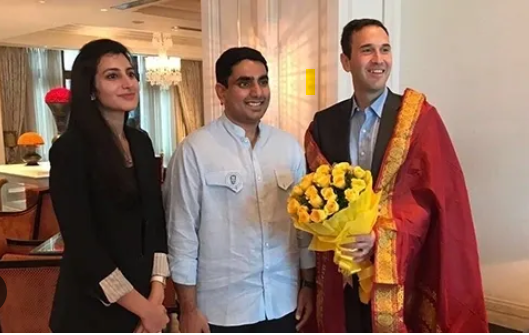
Lokesh took his education seriously and internationally. He pursued a Bachelor’s degree in Management Information Systems from Carnegie Mellon University in Pittsburgh, USA — one of the world’s top institutions for technology and systems thinking.
He then went further. He earned an MBA from Stanford Graduate School of Business — the same institution that shaped some of the most transformative leaders in modern business and government. At Stanford, he was exposed to frameworks for institutional thinking, data-driven policy, and innovation-led growth — ideas that would become central to everything he tried to do in politics.
Education Summary
| Institution | Degree / Achievement |
| Carnegie Mellon University, USA | B.S. — Management Information Systems |
| Stanford Graduate School of Business, USA | MBA |
This combination of technology systems thinking and world-class business education gave him a genuinely different lens from most politicians of his generation. He spoke the language of data, efficiency, and scale at a time when Indian regional politics was still catching up.
Entry into Politics: Organisation Before Elections
Nara Lokesh formally stepped into active politics in 2014 — not by contesting a seat, but by taking on the harder, less glamorous job of rebuilding and modernising the Telugu Desam Party from within.
He was appointed General Secretary of TDP. In that role, he focused on party structure, cadre coordination, and strategic planning. He led one of India’s most ambitious digitally-managed political membership drives — using tablets, centralised databases, and tracking dashboards to enrol over 50 lakh members. It was a new kind of political machinery for Andhra Pradesh, and it worked.
He did not position himself as a symbol. He positioned himself as an operator. That choice would define his early reputation inside the party — as someone who got things done quietly, rather than someone who sought the spotlight.
Ministerial Responsibilities: Governance Through a Technology Lens
In 2017, Lokesh entered the Andhra Pradesh Cabinet as a Member of the Legislative Council. He was assigned portfolios that matched his background — Information Technology and Electronics, Panchayat Raj, Rural Development, and Communications.
His years in the cabinet were marked by a consistent attempt to close the gap between rural Andhra Pradesh and the digital age. He pushed for broadband infrastructure in villages, digital service delivery systems, startup-friendly policies, and skill development aligned with the jobs of the future. Critics questioned his political experience. Supporters pointed to his output. The debate was productive.
The 2019 Defeat: The Moment That Defined Everything After
In 2019, Lokesh contested his first Assembly election from Mangalagiri — a constituency chosen deliberately for its symbolic importance. Expectations were high. The TDP had governed the state. He had ministerial experience. His family name carried enormous weight.
He lost. Narrowly, but clearly.
For many political heirs, that kind of loss becomes the end of the story. They disappear into party roles, or wait for their turn in a safer seat. Lokesh did neither. He chose to do something that no amount of wealth, name, or education could substitute for. He chose to walk.
Yuva Galam Padayatra: 4,000 Kilometres That Changed Everything
The Yuva Galam Padayatra — which translates roughly to “The Voice of Youth Walk” — was unlike anything Lokesh had done before. Over nearly a year, he walked more than 4,000 kilometres across Andhra Pradesh. Every district. Hundreds of villages. He spoke to farmers who had lost crops, to young men who could not find jobs, to women running households on nothing, to old people who had been waiting years for government services that never came.
He did not give speeches at first. He listened. And that was new.
People in Andhra Pradesh had seen politicians arrive in convoys, speak from stages, and leave. Lokesh arrived on foot. He sat in homes. He ate with families. He slept in modest settings. The physical commitment was unmistakable. It could not be faked.
By the end of the padayatra, public perception had shifted meaningfully. The label of “political heir” had been replaced, slowly but genuinely, by something harder to acquire — credibility.
The 2024 Comeback: Mangalagiri, Again
In the 2024 Andhra Pradesh Assembly elections, Lokesh returned to Mangalagiri — the same constituency where he had lost five years earlier. The TDP, in coalition, swept the state. And Lokesh won by a decisive margin.
The victory was personal. But it was also political proof. The walk had worked. The groundwork had worked. The willingness to fail publicly and then rebuild had worked. He was inducted into the cabinet with key portfolios reflecting both his track record and his ambition for the state.
Current Role: Building Andhra Pradesh’s Future
As a Cabinet Minister in the current Andhra Pradesh government, Nara Lokesh holds some of the most consequential portfolios in the state.
Current Portfolios
| Portfolio | Focus Area |
| Information Technology & Electronics | Tech investments, IT infrastructure, startup ecosystem |
| Real-Time Governance | Data-driven monitoring of government services |
| Human Resources Development | Education quality, skill development, employability |
Together, these portfolios make him the primary architect of Andhra Pradesh’s attempt to become a technology-driven, employment-generating state. His goals include attracting global investment, building a startup ecosystem outside Hyderabad, improving education quality, and using real-time data to hold government delivery systems accountable.
He is not the Chief Minister. But the portfolios he holds are where much of the state’s future will be decided.
Major Achievements and Milestones
- General Secretary, TDP — Led digitally-managed membership drive enrolling 50+ lakh members (2014)
- Cabinet Minister, Andhra Pradesh — IT, Panchayat Raj, Rural Development, Communications (2017)
- Yuva Galam Padayatra — 4,000+ km walk across Andhra Pradesh over nearly one year
- Won Mangalagiri Assembly seat with a large majority in 2024 elections
- Cabinet Minister in current AP government — IT, Real-Time Governance, HRD portfolios
- Helped modernise TDP party infrastructure through technology and data systems
Family & Personal Life
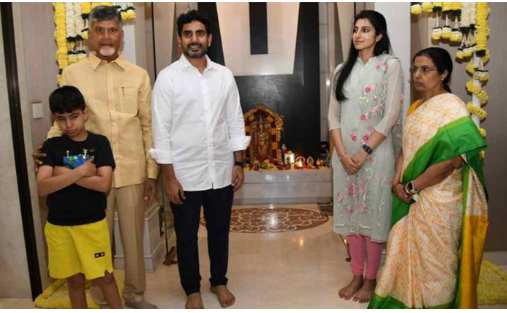
Wife — Nara Brahmani
Nara Lokesh is married to Nara Brahmani, who comes from her own accomplished background. She is the Executive Director of Heritage Foods, a publicly listed FMCG company, and is known for her business acumen and social initiatives. She has been a steady, grounding presence through the turbulent years of electoral defeats, the long padayatra, and the eventual comeback.
Brahmani is also the daughter of N. T. Rama Rao Jr. — which means she is both the daughter-in-law of Chandrababu Naidu and the daughter of NTR’s son. The family connections in Andhra Pradesh’s political and cultural landscape are, to say the least, dense. But those who know the couple say the marriage works because of respect and shared values, not just shared history.
Son — Nara Devaansh
The couple’s son, Nara Devaansh, has earned international attention of his own — for chess. At a very young age, Devaansh achieved records that put him among the most remarkable young chess players in the country. Lokesh frequently mentions his son’s achievements in public forums — a proud father’s rare concession to personal life over political image.
The Weight of Legacy
Being the son of Chandrababu Naidu and the grandson of NTR is not a simple thing. Every decision Lokesh makes is compared to what his father would have done, or what his grandfather represented. Every failure is amplified by the expectation. Every success is partially attributed to the name.
Lokesh has spoken about this with unusual candour in several interviews. He acknowledges the advantages. He also acknowledges the pressure. And he has handled both, ultimately, with more grace than most people in his position manage.
Criticism, Controversies, and Public Scrutiny
Dynastic politics is one of the most debated topics in Indian democracy. Lokesh has faced that debate directly — critics who argue that no amount of education or padayatras can substitute for genuine political emergence from outside a powerful family.
He has also faced specific allegations from political opponents regarding wealth declarations and other matters during his ministerial tenure. He has addressed these publicly. His supporters point to his electoral performance, his administrative record, and the padayatra as evidence that he has earned his place through more than inheritance.
The honest answer is that both things are true. He carries the advantage of his name. And he has worked, visibly and genuinely, to be more than that name.
Frequently Asked Questions About Nara Lokesh
1. Who is Nara Lokesh?
Nara Lokesh is a Cabinet Minister in the Government of Andhra Pradesh and a Member of the Legislative Assembly from Mangalagiri. He is the son of Andhra Pradesh Chief Minister N. Chandrababu Naidu and the grandson of NTR, the founder of the Telugu Desam Party.
2. What is the Yuva Galam Padayatra?
The Yuva Galam Padayatra was a nearly year-long, 4,000+ kilometre walkathon across Andhra Pradesh undertaken by Nara Lokesh between 2022 and 2023. After losing the 2019 elections, he used the walk to reconnect with ordinary citizens — farmers, youth, workers — and to listen to their concerns rather than speak from a platform. It is widely credited with transforming public perception of him and contributing to his landslide victory in 2024.
3. Where did Nara Lokesh study?
Nara Lokesh holds a Bachelor’s degree in Management Information Systems from Carnegie Mellon University, USA, and an MBA from Stanford Graduate School of Business, USA. His education gave him a foundation in technology systems and data-driven governance that distinguishes him from most politicians of his generation.
4. Who is Nara Lokesh’s wife?
Nara Lokesh is married to Nara Brahmani, who is the Executive Director of Heritage Foods and a respected businesswoman in her own right. They have a son, Nara Devaansh, who has achieved international recognition for chess at a very young age.
5. What portfolios does Nara Lokesh hold?
As of 2026, Nara Lokesh holds the portfolios of Information Technology & Electronics, Real-Time Governance, and Human Resources Development in the Andhra Pradesh Cabinet. These make him the primary driver of the state’s technology and education agenda.
Also See — More Leaders & Personalities on KnowledzeHub
- Pawan Kalyan — From Telugu film superstar to Deputy Chief Minister of Andhra Pradesh
- YS Jagan Mohan Reddy — The YSRCP leader and former Chief Minister of Andhra Pradesh
- Sundar Pichai — The Chennai boy who became CEO of Google and Alphabet Inc.