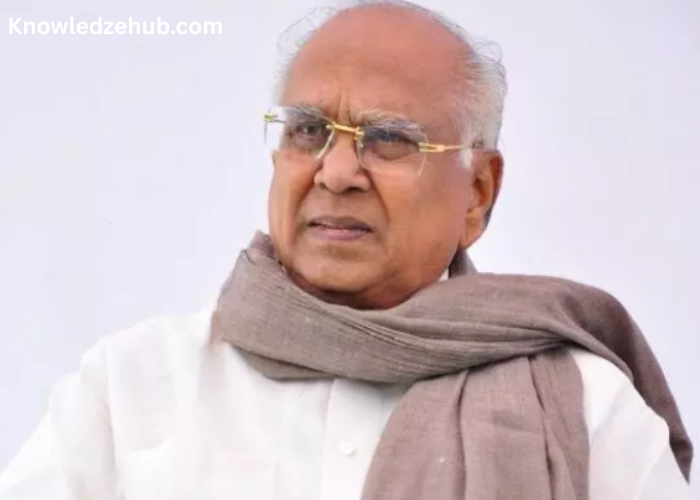

On 20 September 1923, in the small village of Ramapuram in Krishna District, Andhra Pradesh, a child was born who would become the heartbeat of an entire film industry. Akkineni Nageswara Rao known to the world as ANR arrived at a time when Indian cinema was still finding its voice, when sound had only recently entered the medium, when the very idea of a “Telugu film industry” was still being written.
By the time he left us on 22 January 2014, at the age of 90, ANR had changed everything.
He appeared in 256 films over 75 years. He moved an entire film industry from one city to another. He founded a studio that became a temple of Indian filmmaking. He acted opposite every leading actress of his era and pioneered every genre from mythological tales to romantic dramas to social films. His son became a superstar. His grandsons Akhil and Naga Chaitanya also became a superstar.
But more than all of that, Akkineni Nageswara Rao represented something precious a link between Indian cinema’s glorious past and its inevitable future.
Quick Facts About Akkineni Nageswara Rao
| Full Name | Akkineni Nageswara Rao |
| Known As | ANR (throughout his career) |
| Date of Birth | 20 September 1923 |
| Date of Death | 22 January 2014 |
| Age at Death | 90 years |
| Birthplace | Ramapuram, Krishna District, Andhra Pradesh, India |
| Career Span | 1941 – 2014 (75 years) |
| Total Films | 256+ films (predominantly Telugu, some Tamil) |
| Profession | Film Actor, Film Producer, Studio Founder |
| Known For | Telugu cinema’s most influential actor; founder of Annapurna Studios |
| Wife | Annapurna Kollipara (married 18 Feb 1949) |
| Children | 5 children, including son Nagarjuna Akkineni (actor/producer) |
| Grandchildren | 11 grandchildren, many in film industry |
| Nationality | Indian |
| Languages | Telugu, Tamil, Hindi, English |
| Death Place | Hyderabad, Telangana, India |
| Funeral | State honours with 21-gun salute at Annapurna Studios |
Early Life & The Boy From Ramapuram
Akkineni Nageswara Rao was born in Ramapuram, a small agricultural village in the Krishna District of Andhra Pradesh. His family was middle-class respectable, educated, but not wealthy. His father was a man of principles and dignity. His mother embodied the quiet strength of Indian womanhood.
Young Nageswara showed an inclination towards the arts remarkably early. By the age of 10, he had already begun his journey into the performing arts. While his peers were playing cricket in the dust, Nageswara was being drawn towards something else entirely a world of stories, characters, emotions, and human truth that would eventually captivate not just him, but millions.
The journey from Ramapuram to the world’s film screens was not planned. Fate had a hand in it, as it often does.
At Vijayawada railway station, when Nageswara was a young man, he was spotted by legendary filmmaker Ghantasala Balaramaiah. It was a moment that would change the course of his life and, unknowingly, the course of an entire industry.
Balaramaiah saw something in Nageswara a face, yes, but also a presence. A quality that suggested depth. An ability to convey emotion without speaking. The director offered him a leading role in his upcoming film, even though Nageswara had no previous acting experience.
That film was Sri Seeta Rama Jananam (1944), and in it, Nageswara played Lord Rama himself.
The Journey Begins: From Student to Legend (1941-1953)
Nageswara’s actual debut in cinema came three years earlier, in 1941, with a small role in Dharmapatni a minor part, just one of ten schoolchildren in a song. Few would have noticed him. But it was a beginning.
The early years of his career saw him in various roles as princes, romantic heroes, mythological characters, and ordinary men. In 1945, he appeared in Mayalokam. In 1947, in Palnati Yuddham, a historical drama. In 1949, he appeared in Laila Majnu, playing the tragic lover Qais/Majnu a role that would be remembered for his ability to convey longing and heartbreak.
But it was not until 1953 that Akkineni Nageswara Rao truly arrived as a superstar.
That year, director Vedantam Raghavaiah released Devadasu a film that would become a watershed moment in Telugu cinema. Based on the famous Bankim Chandra novel (which had been adapted multiple times across Indian cinema), this version gave ANR a role that became iconic: Devadas, the tragic romantic hero destroyed by a love that society would not permit.
ANR’s portrayal was revelatory. He did not just act the role he became Devadas. Audiences wept. Critics praised. The film’s success transformed ANR from a competent actor into a superstar. More importantly, it established him in the role he would play for the next two decades: the romantic hero, the emotional center of stories about love and sacrifice.
The Golden Era: ANR’s Reign as the King of Telugu Cinema (1954-1979)
If the 1950s belonged to building ANR’s stardom, the 1960s and 1970s were the years when he owned Telugu cinema.
During this 20-year period, from 1960 to 1979, Akkineni Nageswara Rao appeared in approximately 80 films averaging 4 to 5 films per year. He was everywhere. In romantic dramas. In mythological tales. In social films that tackled real issues facing real people. In comedies. He proved himself to be a versatile actor capable of doing anything that a story demanded.
| Decade | Period | Themes & Roles | Notable Films |
|---|---|---|---|
| 1950s | 1950-1959 | Romantic leads, mythological characters | Devadasu (1953), Laila Majnu (1949), Keelu Gurram (1949) |
| 1960s | 1960-1969 | Romantic & social films, character-driven narratives | Mahakavi Kalidasu (1960), Bhakta Jayadeva (1961), Amarasilpi Jakkanna (1967) |
| 1970s | 1970-1979 | Family dramas, epics, transitional roles | Peak output period; 40+ films during decade |
| 1980s-1990s | 1980-1999 | Senior roles, mentoring new talent | Meghasandesam (1983), character roles |
| 2000s-2010s | 2000-2014 | Veteran status, occasional lead/supporting roles | Manam (2014) – final film, left incomplete |
His repertoire during this golden era included roles as:
- Kalidasa in Mahakavi Kalidasu (1960) the legendary Sanskrit poet
- Bhakta Jayadeva in Bhakta Jayadeva (1961) the 12th-century poet
- Amarashilpi Jakkanna in Amarasilpi Jakkanna (1967) the legendary sculptor
- Tenali Ramakrishna in Tenali Ramakrishna (1956) the poet and wit at the Vijayanagara court
- Vipra Narayana in Vipra Narayana (1954) the Tamil saint
He also starred in countless romantic and social dramas that have since become classics of Telugu cinema.
The Collaboration with Directors: ANR’s golden era was built on brilliant collaborations with visionary directors like Adurthi Subba Rao (who specialized in socially conscious dramas), K. Viswanath (who became famous for philosophical and poetic films), and other great directors of the era. These were not just films they were cinematic experiences that shaped how Telugu cinema understood itself.
Building an Empire: Annapurna Studios & Industry Contribution
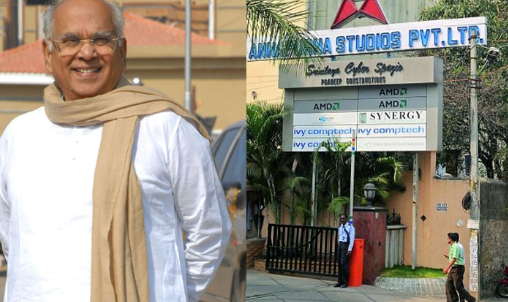
While acting remained his passion, Nageswara was also a businessman and an industrialist of cinema. In 1975, at the height of his career, he made a decision that would reshape the Telugu film industry forever.
He founded Annapurna Studios.
At that time, the Telugu film industry was still centered in Madras (now Chennai), a city in Tamil Nadu. The logistics were difficult. The costs were high. The infrastructure was not ideal for Telugu filmmaking. Nageswara, along with other industry figures like D.V.S. Raju, believed that Telugu cinema deserved its own city, its own infrastructure, its own identity.
Annapurna Studios became that foundation.
From a small facility in the 1970s, Annapurna Studios grew into one of India’s finest production facilities. It became the place where some of Telugu cinema’s greatest films were made. It became a destination for talent from across India. It employed thousands. It trained hundreds of technicians, actors, and craftspeople.
More than that, Annapurna Studios became the symbol of ANR’s legacy not just as an actor, but as a custodian of Telugu cinema’s future.
In 2011, when ANR was 87 years old and still involved in the industry, he founded the Annapurna International School of Film and Media within Annapurna Studios. This school became a formal institution for training the next generation of filmmakers.
The Move to Hyderabad: Annapurna Studios was instrumental in shifting the center of Telugu cinema from Madras to Hyderabad. This was not a small thing. This was an act of cultural and industrial significance. It meant that Telugu cinema would have its own home, its own culture, its own ecosystem. Today, Hyderabad is the heart of Telugu cinema, and much of that is because of Nageswara’s vision.
The Later Years: From Leading Man to Legend (1980-2014)
As ANR entered his 60s, 70s, and 80s, his roles changed. He moved from being the romantic lead to being the patriarch, the elder statesman, the father or grandfather in family dramas.
But he never stopped working.
Even in his 80s, even when his health was declining, Akkineni Nageswara Rao continued to accept film roles. He understood that cinema had given him everything stardom, wealth, legacy, purpose. To cinema, he would continue to give back for as long as he could draw breath.
His final film was Manam (2014), in which he appeared alongside his son Nagarjuna and his grandson Akhil. It was a film about family, about generations, about continuity. Fitting, that this would be his last cinematic statement a film surrounded by his own family, bridging past, present, and future.
He was still shooting Manam when his health began to fail. He had colon cancer a disease that was eating away at him even as he gave his final performances.
On 22 January 2014, Akkineni Nageswara Rao passed away at his home in Hyderabad, surrounded by his family. He was 90 years old.
His funeral procession was one of the largest ever seen in Hyderabad. The government of Telangana accorded him state honours. He was cremated at Annapurna Studios with a 21-gun salute. Tens of thousands of people came to pay their respects.
Major Achievements & Awards
Filmography & Career Milestones:
- First lead role as Lord Rama in Sri Seeta Rama Jananam (1944)
- Breakthrough superstardom with Devadasu (1953)
- Appeared in 256+ films across 75 years (1941-2014)
- Golden era of 80 films in the 1960s-1970s
- Founded Annapurna Studios (1975) one of India’s premier production facilities
- Founded Annapurna International School of Film and Media (2011)
- Instrumental in moving Telugu cinema from Madras to Hyderabad
National Awards & Honors:
- Padma Shri (1968) India’s fourth-highest civilian award
- Filmfare Best Film Award (Telugu, 1968) as producer
- Best Actor Telugu — Marapurani Manishi (1973)
- Best Actor Telugu — Aatma Bandhuvulu (1987)
- Filmfare Lifetime Achievement Award — South (1988)
- Padma Bhushan (1988) India’s third-highest civilian award
- Dadasaheb Phalke Award (1990) The highest award for contributions to Indian cinema
- Padma Vibhushan (2011) India’s second-highest civilian award (awarded posthumously in some cases, but ANR received it while living)
- Raghupathy Venkaiah Award (1989) Andhra Pradesh State award for outstanding contribution to Telugu cinema
- Tamil Nadu State Film Honorary Award (1992)
Legacy & Cultural Impact:
- Reshaped Telugu cinema as an industry and an art form
- Created a template for the Indian film hero that influenced decades of cinema
- Established Annapurna Studios as a symbol of Telugu cinema’s prosperity
- Created a film legacy that influenced his son Nagarjuna, grandson Naga Chaitanya, and grandson Akhil
- One of the most influential actors in the history of Indian cinema.
Family & Personal Life
Wife Annapurna Kollipara
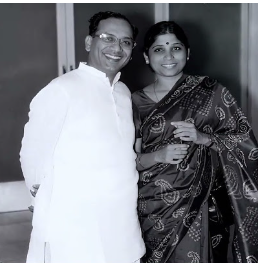
On 18 February 1949, Akkineni Nageswara Rao married Annapurna Kollipara. She was from a respectable family educated, cultured, and deeply supportive of his ambitious dreams in an industry that, at that time, was still finding its feet.
Annapurna was not merely the wife of a film star she was his anchor. She raised their children while he worked 4-5 films a year. She managed the household, managed the finances, managed the household staff at Annapurna Studios. By all accounts, theirs was a marriage built on respect, partnership, and genuine love.
The Pichais’ marriage lasted 65 years from 1949 until Nageswara’s death in 2014. In an era when the film industry was known for its scandals and short-lived romances, the Akkineni marriage stood out as a model of stability and devotion.
Children & The Akkineni Dynasty
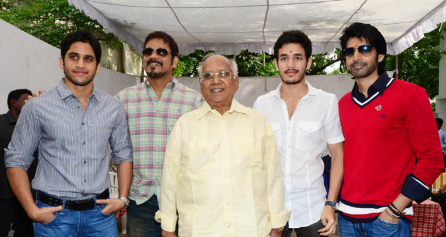
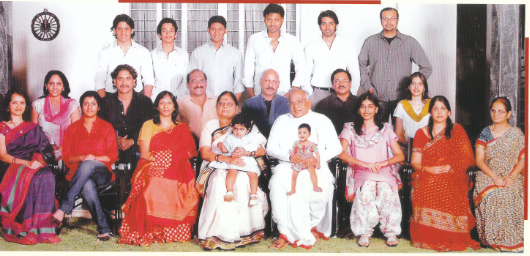
Annapurna and Nageswara had five children together. Among them, three would go on to have significant careers in the film industry.
1. Nagarjuna Akkineni (born 1959) The most famous of his children, Nagarjuna became a superstar actor in his own right. He appeared in Telugu, Tamil, Kannada, and Hindi films. He also became a producer, founding Annapurna Productions. If Nageswara built the industry’s infrastructure through Annapurna Studios, Nagarjuna became the industry’s most visible star for over three decades. The talent clearly runs in the blood Nagarjuna inherited both his father’s acting ability and his entrepreneurial vision.
2. Shruti Akkineni (born 1986, Nagarjuna’s daughter) Nageswara’s granddaughter through Nagarjuna. She has acted in Telugu, Tamil, Hindi, and English films.
3. Akhil Akkineni (born 1994, Nagarjuna’s son) Nageswara’s grandson. He is an actor who has appeared in several Telugu films.
4. Naga Chaitanya (born 1986, Nagarjuna’s son) Nageswara’s grandson. He became a successful Telugu film actor and has also appeared in Hindi and Tamil cinema.
The Akkineni family tree includes three generations of superstars from Nageswara himself, to his son Nagarjuna, to his grandsons Naga Chaitanya and Akhil. This is a rare achievement in Indian cinema.
Life Philosophy & Personal Values
Despite being one of the most famous men in Indian cinema, ANR was known for being remarkably humble and grounded. He was protective of his family’s privacy. He was generous with his time for causes he believed in. He was an educator investing in the next generation through Annapurna Studios and later through the film school.
In interviews given late in his life, ANR spoke about his pride not in his films or his awards, but in the fact that his children had become good people, that his industry had flourished, and that Telugu cinema had a home it could be proud of.
He was a man who understood that true legacy is not measured in box office collections or award statuettes. True legacy is measured in institutions you build, people you inspire, and values you pass on.
Frequently Asked Questions About Akkineni Nageswara Rao
1. Who was Akkineni Nageswara Rao?
Akkineni Nageswara Rao (20 September 1923 – 22 January 2014), known as ANR, was an Indian actor and film producer in Telugu cinema. Over his seven-decade career, he became a prominent figure in the industry, and is among the most influential actors of Indian cinema. He appeared in 256+ films and founded Annapurna Studios, one of India’s premier film production facilities.
2. How many films did Akkineni Nageswara Rao appear in?
Akkineni Nageswara Rao’s filmography comprises 256 films, predominantly in Telugu cinema, spanning a remarkable career from his debut in the minor role of a student in the 1941 film Dharma Patni to his final lead performance in the 2014 family drama Manam.
3. What was his breakthrough role?
His breakthrough came with Devadasu in 1953, where Rao’s portrayal of the tragic romantic lead Devadas earned widespread critical acclaim and solidified his image as a romantic hero in Telugu films. This role not only boosted his stardom but also influenced subsequent adaptations of the story across Indian cinema.
4. Who was Akkineni Nageswara Rao’s wife?
He was married to Annapurna Akkineni. They married on 18 February 1949 and had five children together, including actor and producer Nagarjuna Akkineni.
5. Did Akkineni Nageswara Rao have any children in the film industry?
Yes. His children include Nagarjuna Akkineni, who became a superstar actor, producer, and entrepreneur in Telugu cinema. His grandchildren Naga Chaitanya, Shruti Akkineni and Akhil Akkineni is also an actor.
6. What awards did Akkineni Nageswara Rao receive?
He was awarded Padmasri and Padmabhushan by the Government of India. He was awarded Dadasaheb Phalke award by the Government of India for his outstanding contribution to Indian Cinema. He also received the Padma Vibhushan, India’s second-highest civilian award.
7. What was Annapurna Studios?
He founded Annapurna Studios in the year 1975 to provide infrastructural support to the new film industry in Hyderabad. He later started the Annapurna International School of Film and Media within Annapurna Studios in 2011.
8. How did Akkineni Nageswara Rao contribute to moving Telugu cinema to Hyderabad?
He was one of the instrumental figures in moving the Telugu Cinema industry from Madras to Hyderabad in the early 60s alongside D. V. S. Raju. Annapurna Studios became the physical embodiment of this vision, providing infrastructure and employment that attracted filmmakers and talent to Hyderabad.
9. What was ANR’s final film?
He was filming for the film Manam before his death. This 2014 family drama was notable for featuring three generations of the Akkineni family Nageswara, his son Nagarjuna, and his grandson Akhil.
10. How did Akkineni Nageswara Rao die?
He had colon cancer. He was incremated with full state honours at Annapurna Studios on January 23rd, 2014, in the wake of a 21-gun salute.
11. What is the Akkineni family legacy in film?
The Akkineni family represents a rare three-generation dynasty in Indian cinema. From ANR’s pioneering work as an actor and studio founder, to his son Nagarjuna’s success as an actor-producer, to his grandchildren’s careers in film, the family has been instrumental in shaping Telugu cinema for over 80 years.
12. Was Akkineni Nageswara Rao only a Telugu cinema actor?
While he was primarily known for Telugu cinema, ANR also appeared in Tamil films. His versatility as an actor made him appealing across linguistic and regional boundaries, and his influence extended far beyond just Telugu cinema into the broader landscape of Indian film history.
Also See More Cinema Legends & Indian Icons on KnowledgeHub
- Rajinikanth The Superstar of Tamil Cinema and his incredible journey from a bus conductor to becoming an icon
- Amitabh Bachchan Bollywood’s Big B and his journey from struggling actor to megastar
- K. Viswanath The Visionary Director who reshaped Telugu cinema
- Savitri The Tragedy Queen of Telugu cinema and her legendary performances
- M.S. Subbulakshmi The Voice of South India and Indian classical music’s most revered figure