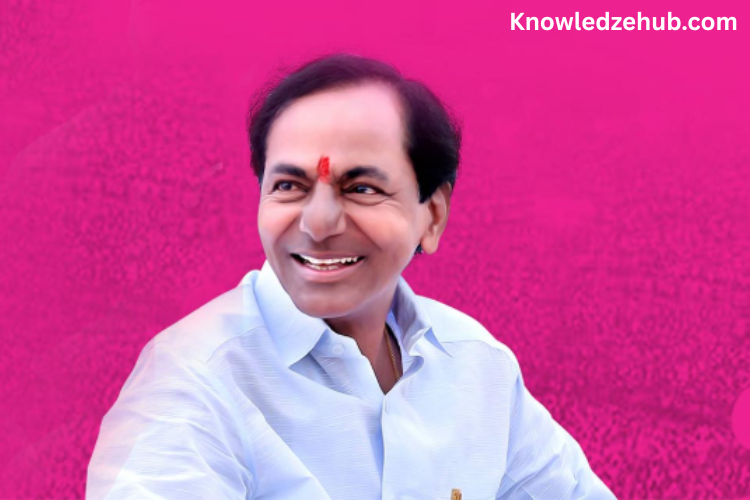

In a small agricultural village called Chintamadaka in the Medak district of what was then Hyderabad State, a boy grew up watching farmers struggle, listening to elders speak of injustice, and absorbing the quiet rage of a region that felt forgotten. There was no family political legacy to lean on. No dynastic power. No silver spoon.
That boy was Kalvakuntla Chandrashekar Rao. The world knows him as KCR — the man who gave 40 million people a home of their own. The founding father of Telangana, India’s 29th state. A politician who risked his life on a fast-unto-death, got arrested, was hospitalised, and still did not stop until New Delhi heard him.
His journey from that village in Medak to the Chief Minister’s chair in Hyderabad is one of the most dramatic and consequential stories in the history of Indian democracy. It is a story about identity, sacrifice, strategy, and the unshakeable belief that a wrong could be righted — no matter how long it took.
Quick Facts About KCR
| Full Name | Kalvakuntla Chandrashekar Rao |
| Date of Birth | 17 February 1954 |
| Age (2026) | 72 years |
| Birthplace | Chintamadaka village, Medak district, Telangana |
| Caste | Velama |
| Profession | Politician, Founder of Telangana State |
| Known For | First Chief Minister of Telangana; Telangana Statehood Movement |
| Political Party | Bharat Rashtra Samithi (BRS), formerly TRS |
| Wife | Shobha Rao (née Shobha, daughter of freedom fighter J. Keshava Rao) |
| Children | K.T. Rama Rao (KTR) — son; Kavitha Kalvakuntla — daughter |
| Net Worth (2026) | Approx. ₹25–30 crore (declared assets) |
| Nationality | Indian |
| Languages | Telugu, Hindi, Urdu, English |
| Residence | Pragathi Bhavan / Farm house, Hyderabad, Telangana |
| Current Role (2026) | Leader of the Opposition, Telangana Legislative Assembly |
Early Life & Education — From Chintamadaka to Osmania University
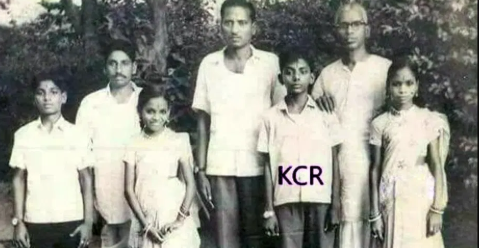
Kalvakuntla Chandrashekar Rao was born on 17 February 1954 in the village of Chintamadaka in what is now the Siddipet district of Telangana. His father was Raghava Rao and his mother was Venkatamma. He grew up in a large family — nine sisters and one elder brother — in an agrarian community where the rhythms of life were determined by rainfall and crops, not corporate calendars.
The Telangana region in which KCR grew up was one that had long felt economically and politically marginalised within the unified state of Andhra Pradesh, formed in 1956. Jobs in government, water from rivers, funds from the state treasury — locals felt that the Seemandhra region consistently received more than its fair share. These grievances were not abstract political talking points for a child in Chintamadaka. They were the conversations at the dinner table, the complaints of the farmers next door, the daily reality of life.
KCR completed his schooling in Siddipet and went on to pursue higher education in Hyderabad. He earned his Bachelor of Arts degree and then his Master’s degree in Telugu Literature from the Arts College at Osmania University — one of Telangana’s most prestigious institutions, and historically a centre of regional identity and intellectual thought.
It was at Osmania University that something crystallised in KCR. His love of Telugu language and literature deepened his emotional bond with the Telangana identity. His education was not in engineering or management or law — it was in the language, poetry, and culture of his people. That cultural rootedness would define every speech he ever gave, every slogan he coined, and every crowd he moved.
| Institution | Location | Degree / Achievement |
| Siddipet Area School | Telangana | Schooling |
| Osmania University | Hyderabad | B.A. (Arts) |
| Osmania University (Arts College) | Hyderabad | M.A. — Telugu Literature |
Political Career — The Long Road to Statehood
The Beginning — Youth Congress & TDP Years (1970–2001)
KCR entered politics in the early 1970s when he joined the Youth Congress in Medak district, then operating under the influence of Sanjay Gandhi. He was a young man with sharp oratorical instincts and a genuine connection to the ground realities of rural Telangana.
In 1983, he made a significant shift — he joined the Telugu Desam Party (TDP), the party founded by the legendary actor-politician N.T. Rama Rao, who had swept to power on a wave of Telugu self-respect. KCR contested the 1983 Assembly elections as an independent from Siddipet and lost. But he persisted.
From 1985 onwards, KCR won four consecutive elections to the Andhra Pradesh Assembly from Siddipet constituency. Within the TDP, he rose steadily — serving as Minister for Drought and Relief under N.T. Rama Rao’s cabinet in 1987-88, as Transport Minister under Chandrababu Naidu in 1997-2000, and finally as Deputy Speaker of the Andhra Pradesh Legislative Assembly from 2000 to 2001.
By 2001, KCR had a comfortable political career. He was a minister, a respected MLA with four consecutive victories, and a fixture of the Andhra Pradesh establishment. He could have continued down that path. He did not.
The Great Resignation — Founding TRS (April 27, 2001)
On 27 April 2001, Kalvakuntla Chandrashekar Rao resigned from the Telugu Desam Party, gave up his position as Deputy Speaker of the AP Assembly, and walked away from everything he had built inside the system. The reason was the Telangana question.
KCR’s position was unambiguous: the people of Telangana had been systematically discriminated against within the unified state of Andhra Pradesh. Jobs, water, government funds, political representation — he argued that Telangana received less than its due while the Seemandhra region prospered. The only solution, he believed, was a separate state.
On the same day he resigned, KCR founded the Telangana Rashtra Samithi (TRS) at a public meeting in Hyderabad, with the single-point agenda of achieving Telangana statehood. That one decision changed not just his own career but the political map of India.
Building a Movement (2001–2009)
The years between founding TRS and the pivotal 2009 hunger strike were not easy. KCR fought election after election on the Telangana platform. In the 2004 general elections, TRS allied with the Congress, which promised Telangana statehood. KCR won both the Siddipet Assembly seat and the Karimnagar Lok Sabha constituency. He became a Union Cabinet Minister for Labour and Employment in the UPA government led by Manmohan Singh.
But the Congress did not deliver on its promise. In 2006, KCR withdrew TRS from the UPA coalition and resigned as Union Minister, stating that the alliance had no intention of creating Telangana. He resigned his Lok Sabha seat and fought a by-election — winning it to demonstrate that his people were still with him.
The 2009 elections were difficult. TRS suffered setbacks and KCR faced real political pressure. His critics said the movement had peaked and faded. They were wrong.
The Hunger Strike That Changed History (November 29 – December 9, 2009)
In September 2009, the sudden death of Andhra Pradesh Chief Minister Y.S. Rajasekhara Reddy in a helicopter crash threw the state into political turmoil. KCR saw an opportunity — and took it.
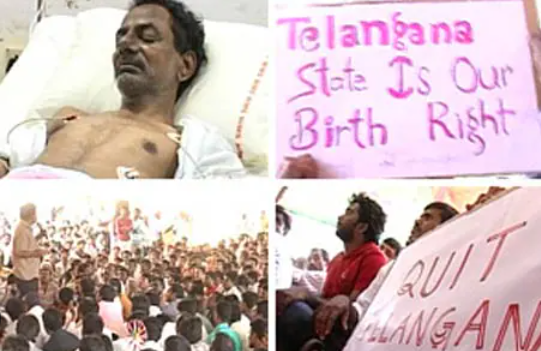
On 29 November 2009, KCR launched an indefinite hunger strike demanding the introduction of the Telangana Statehood Bill in Parliament. Before he could even reach his intended venue in Siddipet, police arrested him and shifted him to Khammam jail. In jail, KCR continued his fast.
As his health deteriorated, he was moved to the Nizam’s Institute of Medical Sciences (NIMS) in Hyderabad. Still he did not break the fast. Telangana erupted. Student protests, bandhs, candlelight marches, road blockades — the entire region mobilised around one man on a hospital bed refusing to eat until justice was done.
On 9 December 2009 — the 11th day of the hunger strike — the Union Home Minister P. Chidambaram made a historic announcement: the Central Government would initiate the process for the formation of the state of Telangana. KCR ended his fast. That day is now commemorated as Deeksha Divas across Telangana.
The government later reversed course under pressure from Seemandhra politicians. The battle was not over. But the 11-day fast had proven one thing beyond all doubt: KCR was willing to die for Telangana. And the people of Telangana were willing to rise for him.
The Final Push — Telangana Bill Passed (2013–2014)
The road from 2009 to 2014 was filled with negotiations, political realignments, agitations, and setbacks. But the momentum was irreversible. On 30 July 2013, the Congress Working Committee formally approved the resolution for the creation of Telangana. The Andhra Pradesh Reorganisation Bill was passed by Parliament on 20 February 2014.
India had a new state. After 13 years of relentless struggle, after hunger strikes and arrests and electoral defeats and personal sacrifices, Telangana was real.
Chief Minister of Telangana — Building a State from Scratch (2014–2023)
First Term as CM (2014–2018)
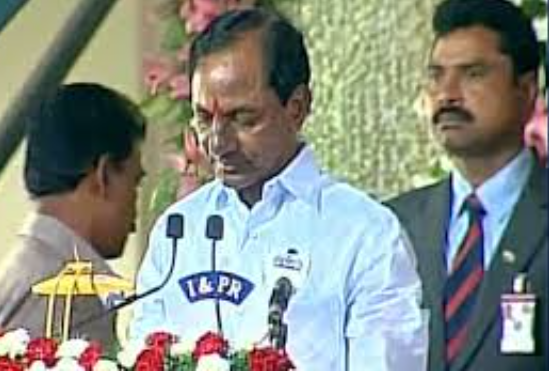
On 2 June 2014 — Telangana Formation Day — Kalvakuntla Chandrashekar Rao was sworn in as the first Chief Minister of the 29th state of India. He took oath at 12:57 PM, a time chosen with the advice of priests to align with his numerologically significant lucky number six. That detail tells you something important about KCR — a man who led a 13-year political revolution guided equally by strategy and deep-rooted faith.
In the 2014 elections, TRS won 63 of 119 Assembly seats — enough for a comfortable majority. KCR inherited a state with no existing secretariat, no established bureaucratic systems, and enormous expectations from a population that had waited decades for self-rule.
His flagship initiatives in the first term included Mission Kakatiya — a massive programme to restore and rejuvenate over 46,000 tanks and water bodies across Telangana, many of which had fallen into disrepair over generations. Mission Bhagiratha brought piped drinking water to rural households across the state. The Rythu Bandhu scheme provided direct financial investment support to farmers per acre of land — a model that was later studied by other state governments. KCR Kits for pregnant mothers, Aasara pension schemes for the elderly and disabled, and Kalyana Lakshmi for women from weaker sections — these programmes made tangible differences in millions of lives.
The Kaleswaram Irrigation Project
The most ambitious and controversial project of KCR’s tenure was the Kaleswaram Lift Irrigation Project, launched in 2019. With a capital outlay of approximately ₹80,000 crore, it was one of the largest irrigation projects in world history by scale and cost — designed to lift water from the Godavari river system and irrigate one crore acres of farmland across Telangana.
Supporters called it a visionary act of nation-building. Critics raised serious concerns about cost overruns, technical failures, and alleged financial irregularities. The project became both KCR’s greatest infrastructure legacy and a significant political liability when questions arose about its execution.
Second Term — Landslide Victory (2018–2023)
In September 2018, KCR made a bold move — he dissolved the Telangana Assembly nine months before its scheduled term ended and called for early elections. It was a calculated political gamble: go to the people at the peak of his government’s popularity before the opposition had time to consolidate.
The gamble paid off spectacularly. In December 2018, TRS won 88 of 119 seats — one of the most decisive victories in Telangana’s short electoral history. KCR was sworn in for a second consecutive term as Chief Minister. The mandate was emphatic.
During the second term, KCR increasingly set his sights beyond Telangana. In 2022, he renamed the TRS as the Bharat Rashtra Samithi (BRS) — Bharat (India) replacing Telangana — signalling ambitions for a national role. He began building alliances with other regional parties and positioning BRS as a third alternative to both the BJP and Congress in Indian politics.
The 2023 Defeat — End of an Era
The 2023 Telangana Assembly elections were a reckoning. KCR’s BRS faced a resurgent Congress party led by Revanth Reddy, which ran on an aggressive anti-incumbency campaign. The public mood had shifted — concerns about corruption, dynastic politics, the unfinished promises of Kaleswaram, and the cost of living gave the Congress significant momentum.
The results were stunning. Congress swept to power with a strong majority. KCR won his own Gajwel constituency but lost the second seat in Kamareddy. He resigned as Chief Minister on 3 December 2023. Revanth Reddy was sworn in as the new Chief Minister of Telangana.
KCR transitioned to the role of Leader of the Opposition in the Telangana Legislative Assembly — a position he holds as of 2026. His national ambitions for BRS did not materialise. But his place in history as the man who created Telangana is permanent and unchallengeable.
Major Achievements & Milestones
- Founded Telangana Rashtra Samithi (TRS) on 27 April 2001 — a party built for one purpose
- Led the 2009 hunger strike that forced the Central Government to initiate Telangana statehood process
- Became the first Chief Minister of Telangana on 2 June 2014 — India’s 29th state
- Won consecutive terms in 2014 (63 seats) and 2018 (88 seats) with overwhelming majorities
- Launched Mission Kakatiya — revival of 46,000+ water tanks across Telangana
- Launched Mission Bhagiratha — piped drinking water to rural Telangana
- Introduced Rythu Bandhu — direct farm investment support scheme for farmers, later replicated nationally
- Conceived and launched Kaleswaram Lift Irrigation Project — one of the world’s largest irrigation schemes
- Renamed TRS to Bharat Rashtra Samithi (BRS) in 2022, signalling national political ambitions
- Served as Union Minister of Labour & Employment in UPA Government (2004–2006)
- Served as Deputy Speaker, Andhra Pradesh Legislative Assembly (2000–2001)
- Four-time MLA from Siddipet under TDP (1985–1999)
KCR Net Worth 2026
KCR’s declared assets, as submitted in electoral affidavits, stand at approximately ₹25–30 crore — making him considerably less wealthy on paper than many of his political peers. His primary declared assets include agricultural land, residential property, and financial investments.
However, political analysts and journalists have noted that KCR’s lifestyle — including his farm house in Erravelli, his ceremonial residence at Pragathi Bhavan, and his family’s political infrastructure — suggests a level of resources that goes well beyond his declared personal wealth. Much of the visible wealth in the KCR family ecosystem is associated with his children KTR and Kavitha, who are independent political figures with their own declared assets.
| Asset / Source | Value | Details |
| Agricultural Land | ₹3–5 crore | Farm in Erravelli, Siddipet district |
| Residential Property | ₹4–6 crore | Residential properties in Hyderabad |
| Financial Investments | ₹10–15 crore | Bank deposits, bonds, shares per affidavits |
| Total Declared Net Worth | ₹25–30 crore | Based on Electoral Commission affidavits (2026 estimates) |
Family & Personal Life
Wife — Shobha Rao
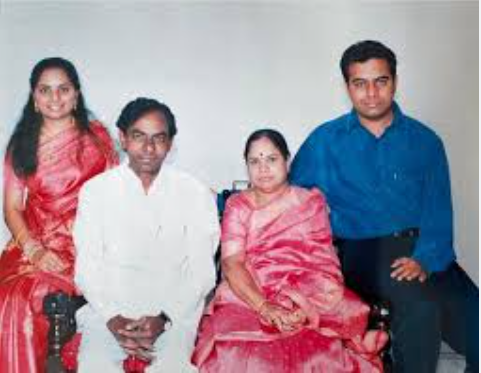
KCR married Shobha on 23 April 1969. Shobha is the daughter of J. Keshava Rao, a freedom fighter from Kodurpaaka. She has been a consistent presence in KCR’s life through the long years of struggle, political uncertainty, electoral defeats, and eventual triumph. Unlike many political spouses in contemporary India, Shobha Rao maintains an extremely low public profile — she rarely appears at political events or in the media.
Those close to the family say that KCR’s home life has always been a refuge from the storms of politics — and Shobha has been the quiet architect of that stability. Through the years when KCR was risking everything for Telangana, when there were electoral defeats and political betrayals and moments of genuine despair, she remained the constant.
Son — K.T. Rama Rao (KTR)
K.T. Rama Rao — universally known as KTR — is KCR’s son and has emerged as one of the most dynamic politicians of his generation in southern India. KTR served as a Cabinet Minister in the Telangana government with portfolios including IT, Municipal Administration, Industries and Commerce. He was projected as KCR’s political heir and the future Chief Minister of Telangana.
KTR is known for his fluent English, his technology-focused governance vision, and his relatively modern political style that contrasts with his father’s more traditional, cadre-driven approach. He represented Siricilla constituency in the Telangana Assembly. KTR has faced legal challenges including cases related to the Formula E race event organised during BRS rule, which remain under investigation as of 2026.
Daughter — Kavitha Kalvakuntla
Kalvakuntla Kavitha is KCR’s daughter and a politician in her own right. She served as a Member of Parliament from Nizamabad and was a prominent face of TRS/BRS at the national level. Kavitha became the centre of a major controversy when she was named in connection with the Delhi liquor policy case investigated by the CBI and ED. She was arrested in March 2024 and spent several months in custody before receiving bail. The case dealt a significant blow to the BRS and to KCR’s political standing.
Personal Traits & Beliefs
KCR is famous for his extraordinary oratory. His command of Telugu — poetic, earthy, emotionally charged, infused with Urdu idioms — is considered one of the finest in modern Indian politics. When KCR spoke at a public meeting, he did not just give a speech. He told a story. He made people feel the injustice. He made the demand for Telangana visceral, not intellectual.
He is a devout believer in astrology, numerology, and Vastu Shastra — facts widely reported and acknowledged. The timing of his oath as CM, the naming of schemes, the architecture of Pragathi Bhavan — all are said to reflect inputs from his spiritual advisors. Critics mock this. Supporters see it as authentic expression of a man who has never pretended to be anything other than what he is.
KCR is also known for his love of farming. His Erravelli farm, where he breeds cattle and grows crops, is not a showpiece hobby estate — people close to him say he genuinely finds peace there, away from the pressures of politics. The farm boy from Chintamadaka never entirely left the land.
Frequently Asked Questions About KCR
1. What is KCR’s full name?
KCR’s full name is Kalvakuntla Chandrashekar Rao. He was born in Chintamadaka village in the Medak district of present-day Telangana on 17 February 1954. He is universally known by his initials KCR.
2. What did KCR do for Telangana?
KCR resigned from a comfortable ministerial career in 2001, founded the Telangana Rashtra Samithi with the single objective of creating a separate Telangana state, led a 13-year agitation including a life-threatening hunger strike in 2009, and ultimately achieved the creation of Telangana as India’s 29th state on 2 June 2014. He then served as its first Chief Minister for nine years, implementing major welfare and irrigation schemes.
3. Who is KCR’s wife?
KCR is married to Shobha Rao, daughter of freedom fighter J. Keshava Rao from Kodurpaaka. They married on 23 April 1969. She maintains a private life away from the political spotlight. They have two children — son K.T. Rama Rao (KTR) and daughter Kavitha Kalvakuntla.
4. What is KCR’s net worth in 2026?
Based on electoral affidavits, KCR’s declared assets stand at approximately ₹25–30 crore. His wealth comes from agricultural land, residential property, and financial investments. Unlike many Indian politicians of his stature, his officially declared assets are relatively modest.
5. What is KCR doing in 2026?
As of 2026, KCR serves as the Leader of the Opposition in the Telangana Legislative Assembly. After BRS’s defeat in the December 2023 elections to the Indian National Congress, he resigned as Chief Minister and transitioned to opposition politics. He continues as president of BRS and remains a significant force in Telangana’s political landscape, though his national ambitions for the party have not materialised as hoped.
6. What was the significance of KCR’s 2009 hunger strike?
The November-December 2009 hunger strike was the turning point of the Telangana statehood movement. KCR launched an indefinite fast on 29 November 2009. He was arrested, shifted to jail, and then hospitalised as his health deteriorated. After 11 days, on 9 December 2009, the Union Home Minister announced that the government would initiate the process for Telangana statehood. The fast demonstrated KCR’s personal commitment to the cause and galvanised mass mobilisation across Telangana.
Also See — More Politicians & Public Leaders
- Yogi Adityanath — The monk-turned-Chief Minister of Uttar Pradesh and one of India’s most powerful BJP leaders
- Chandrababu Naidu — Andhra Pradesh CM, technology visionary, and veteran of five decades in Indian politics
- Revanth Reddy — The new Chief Minister of Telangana and KCR’s political successor in Hyderabad
- Pawan Kalyan — From Telugu film superstar to Deputy Chief Minister of Andhra Pradesh